The Sacred Hum and the Shield of Bees: A History of Irish Beekeeping
In the emerald expanse of ancient Ireland, the honeybee was more than a mere insect; it was a sacred entity, a legal citizen, and a divine protector. To the early Gaels, the low vibration of a hive was the “sound of the sun,” and the golden nectar it produced was considered a holy substance capable of healing the sick and sealing the pacts of kings.
The story of beekeeping in Ireland—a history stretching back over 1,500 years—is a unique blend of rigorous legal codes, monastic science, and the powerful folklore of saints like Domnóc and the formidable Gobnait.
1. The Bechbretha: The Law of the Winged Citizen
Long before most of Europe had developed formal property rights, the Irish had the Bechbretha (Bee-Judgments). Compiled in the 7th century as part of the sophisticated Brehon Law system, these texts prove that the Irish were the most advanced apiculturists of the early medieval world.
Bees were treated with a level of legal nuance usually reserved for humans. The laws were incredibly specific:
• The Theft of Honey: Stealing honey from a neighbor’s hive was not just a simple crime; it was a spiritual violation, as the bees were considered “noble” creatures.
• The Swarm Rights: If a swarm left its original hive and settled on a neighbor’s land, the Bechbretha dictated a complex four-year cycle of honey-sharing to ensure both the hive owner and the land owner were fairly compensated.
• Retribution for Stings: If a bee stung you, you were entitled to a meal of honey as compensation. However, if you killed the bee in retaliation, you forfeited your right to the honey, as the life of the bee was deemed more valuable than the temporary pain of the sting.
2. The Patroness of the Hives: Saint Gobnait of Ballyvourney
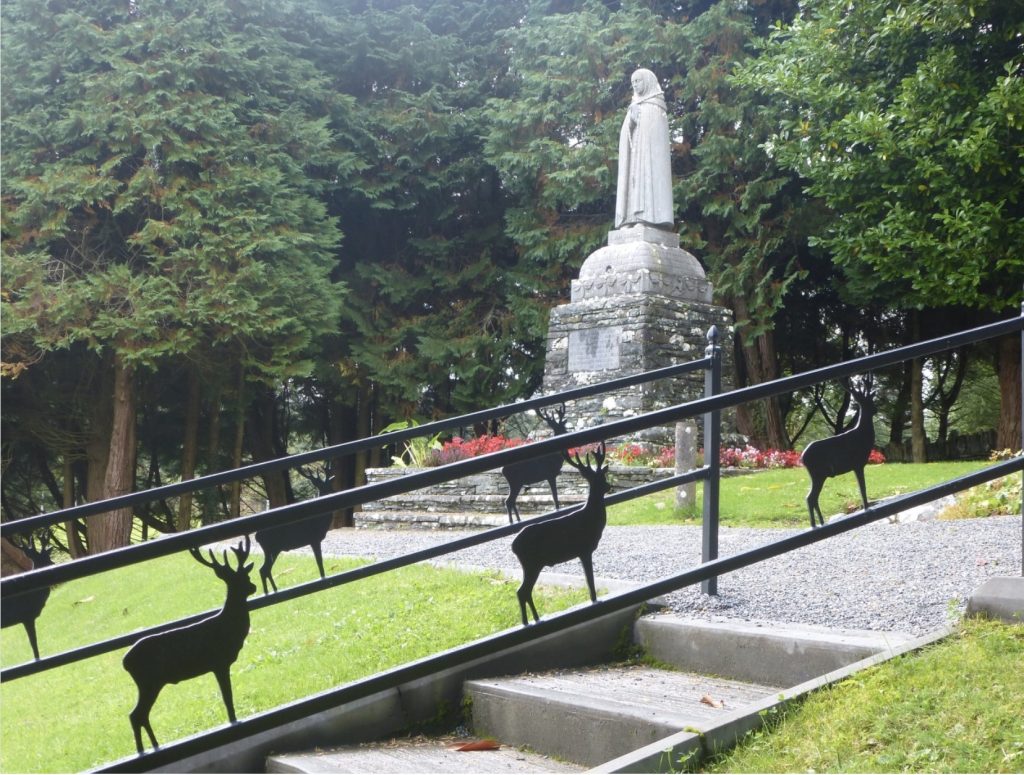
While the legal codes managed the honey, the spiritual life of the bees was overseen by Saint Gobnait (Gobnet). Based in Ballyvourney, County Cork, in the 6th century, Gobnait is the ultimate patroness of beekeepers and healers.
Legend tells us that an angel instructed Gobnait to find her “resurrection place” where she saw nine white deer grazing. Her journey led her to the hills of Cork, where she established a nunnery that became a center for advanced medicine and beekeeping.
The Miracle of the Iron Bees:
Gobnait’s most famous legend is one of defense. When a band of raiders approached her village to steal cattle, Gobnait did not call for soldiers. Instead, she opened her hives. As the bees flew toward the invaders, they were said to have transformed into red-hot bolts of iron or molten brass, driving the attackers away. This story highlights the deep-seated Irish belief that the bee was a protector of the community—a “small bird of God” that could strike down injustice.
3. St. Domnóc and the Great Migration
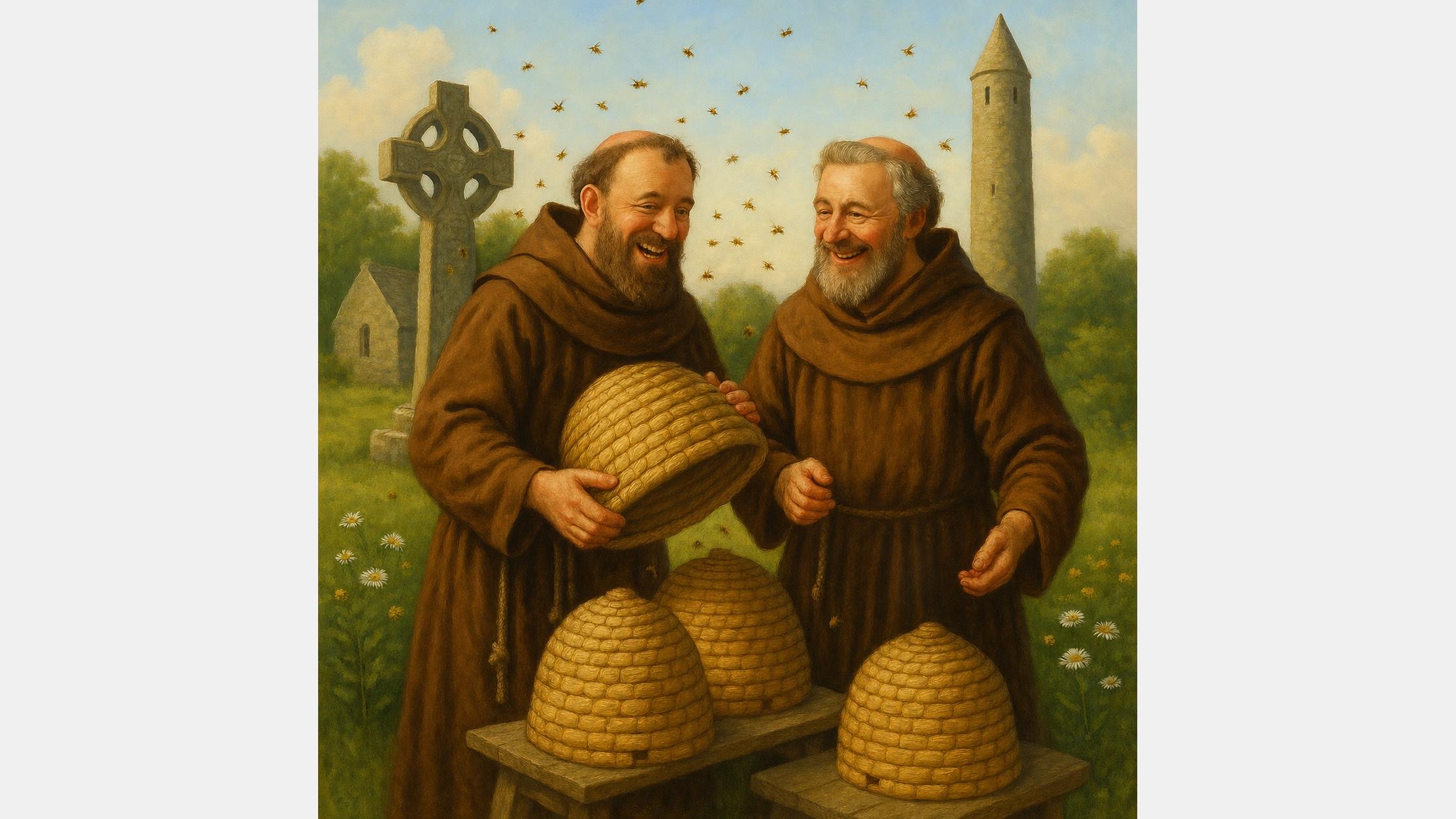
While Gobnait protected the hives, St. Domnóc is traditionally credited with the “domestication” of the honeybee in Ireland. A student of St. David in Wales, Domnóc spent years tending the monastery gardens and hives.
When it was time for him to return home to Ireland, his bees were so devoted to him that they followed his ship out to sea. Three times he tried to return them to the Welsh coast, and three times they swarmed his mast. Eventually, he brought them across the Irish Sea, landing at Copper Coast in Wexford. This “Saint’s Swarm” is said to be the foundation of managed beekeeping in Ireland, turning the wild Apis mellifera mellifera (the Native Irish Black Bee) into a cornerstone of Irish agriculture.
4. Folklore: “Telling the Bees” and the Elder Tree
In the Irish countryside, the relationship between the beekeeper and the hive was deeply personal. This birthed the tradition of “Telling the Bees.” It was believed that bees were so attuned to the family they lived with that they must be kept informed of all major life events.
If a marriage occurred, the hives were decorated with ribbons. If a death occurred, the head of the house would knock gently on each hive and whisper: “The master has gone, but stay you here.” Failure to “tell” the bees would result in the colony leaving the hive or dying, as they were seen as messengers between this world and the “Otherworld.”
This folklore extended to the flora. The Elder Tree (Trumm) held a protected status as a “Bushel of the Wood” under Brehon Law. The Irish knew that bees drawn to the Elder produced a distinct, medicinal honey. The nectar from the Elderflowers and the dark juice of the Elderberries were often fermented with honey to create a tonic mead that was used by healers like Gobnait to treat everything from the flu to the “Yellow Plague.”
5. The Advanced Science of the Black Bee
The success of Irish beekeeping was rooted in the Native Irish Black Bee. This hardy, dark-bodied bee was uniquely adapted to the Atlantic climate. While Viking foragers often struggled with the unpredictable Irish weather, the Irish had bred a bee that could fly in light rain and forage in temperatures that would freeze Continental varieties.
This environmental advantage allowed Irish monasteries to become the premier producers of beeswax and honey in Northern Europe. Beeswax was vital for the “White Candles” of the church, and Irish honey was a high-value export, often traded for wine from France or silk from the East.
6. The Modern Revival: A Golden Future
Today, the spirit of Gobnait and Domnóc lives on in a massive resurgence of Irish apiculture. The Native Irish Honey Bee is now a symbol of conservation, and Irish “Heather Honey” is gaining global recognition for its high phenolic content and medicinal properties—rivalling even the famous Manuka honey of New Zealand.
From the legal precision of the Bechbretha to the miraculous “Iron Bees” of Ballyvourney, Ireland’s history with the honeybee is a testament to a culture that saw the natural world as a partner, not a resource. To keep bees in Ireland today is to participate in an unbroken lineage of sacred work.