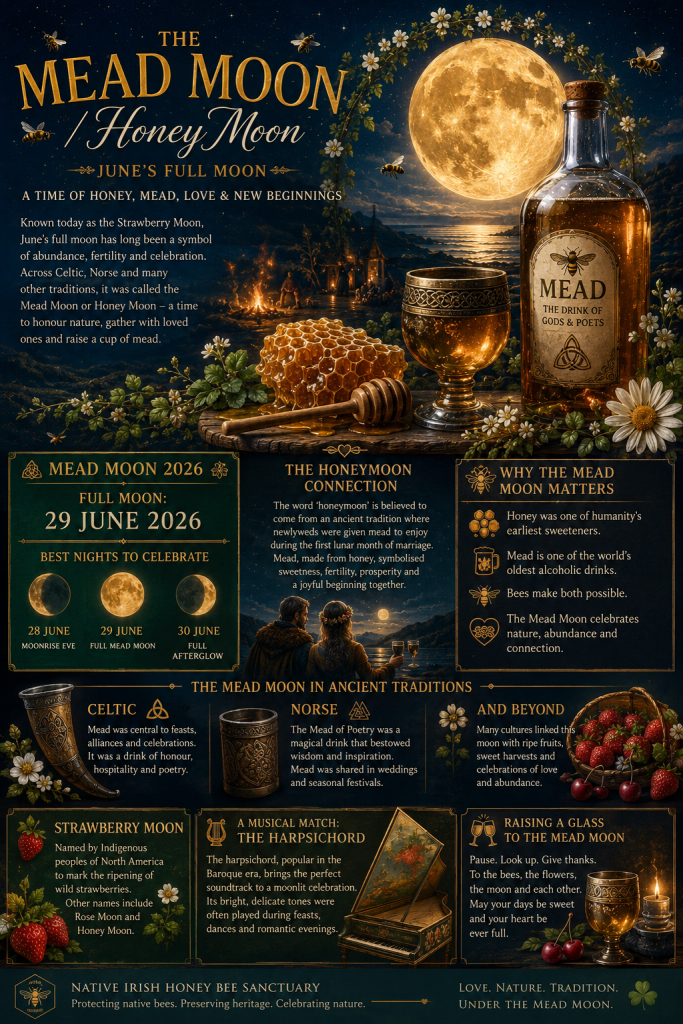
Mead Moon / Honey Moon – June
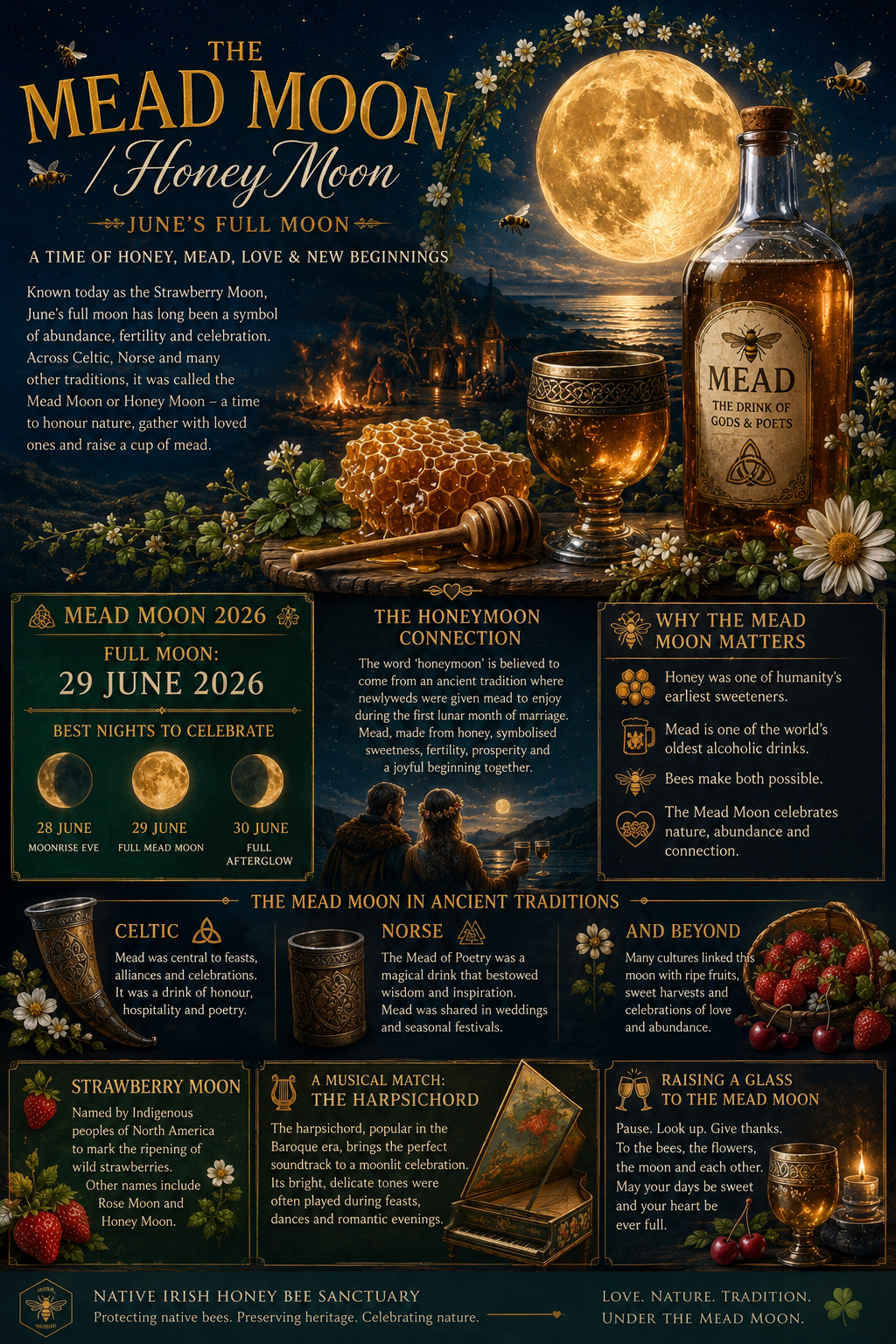
How June’s Full Moon Inspired the Honeymoon Tradition
Each June, as summer begins and wildflowers reach their peak, a magnificent full moon rises above the landscape. Today it is most commonly known as the Strawberry Moon, a name used by several Indigenous North American peoples to mark the short season when wild strawberries ripen. Yet across Europe, particularly in Celtic and Norse traditions, June’s full moon was also associated with honey, mead, marriage and abundance.
Long before refined sugar became common, honey was one of nature’s most treasured foods. Early summer was a time when hives were thriving, flowers were abundant, and honey represented wealth, nourishment and good fortune. From honey came mead, one of the world’s oldest fermented drinks, enjoyed for thousands of years across Europe.
In Celtic societies, honey and mead held a special place in both daily life and ceremony. Mead was associated with hospitality, celebration and the bonds between people. Irish mythology contains many references to great feasts where mead was shared among warriors, kings and honoured guests. The legendary halls of Tara and the royal courts of ancient Ireland would have regarded mead as a drink worthy of special occasions.
The Norse peoples also celebrated mead. In Norse mythology, the Mead of Poetry was a magical drink that bestowed wisdom and inspiration. Mead was frequently served during weddings, seasonal festivals and gatherings. A successful marriage was often viewed as a partnership blessed with prosperity, fertility and abundance—the very qualities symbolised by honey and mead.
Many historians believe these traditions contributed to the origin of the word honeymoon. According to popular folklore, newly married couples were given enough mead to last for one cycle of the moon following their wedding. Whether entirely historical or partly legendary, the connection between honey, mead, marriage and the moon has endured for centuries.
June’s full moon therefore became known in various regions as the Honey Moon, Mead Moon, or later the Strawberry Moon. Each name reflects a slightly different aspect of the season: the harvest of early fruits, the abundance of honey, the brewing of mead and the celebration of new beginnings.
Today the Mead Moon offers a wonderful opportunity to reconnect with these ancient traditions. It reminds us that bees are far more than honey producers. They are essential pollinators that support biodiversity, food production and healthy ecosystems. Without bees, many of the flowers, fruits and plants associated with summer would struggle to survive.
At the Native Irish Honey Bee Sanctuary, the Mead Moon is celebrated as a symbol of the deep connection between people, pollinators and the natural world. It honours the native Irish honey bee, the honey it produces, the ancient traditions that inspired the honeymoon, and the enduring role bees play in our environment.
As the June moon rises, it offers a moment to pause, reflect and celebrate. Whether known as the Strawberry Moon, Honey Moon or Mead Moon, it remains one of nature’s most beautiful reminders of abundance, connection and the sweetness of life.
Quick Facts 🌕🍯
- Full Mead/Strawberry Moon 2026: 29 June 2026
- Best viewing nights: 28–30 June 2026
- Alternative names: Mead Moon, Honey Moon, Strawberry Moon, Rose Moon
- Associated themes: Love, marriage, fertility, abundance, honey, mead and summer
- Ancient links: Celtic feasting traditions, Norse mead culture, European honeymoon folklore
- Modern significance: Celebrating pollinators, biodiversity and the native Irish honey bee.